
When the patterns shift, your life follows.
Experience EMDR therapy designed to heal at the root and create lasting change across the body, mind, and nervous system.
In person + Online EMDR Therapy in Westlake Village and California
What is EMDR Therapy?
EMDR (Eye Movement Desensitization and Reprocessing) is an evidence-based therapy that helps individuals heal from trauma and other overwhelming life experiences. Originally developed for PTSD, EMDR has shown to have efficacy for additional concerns such as anxiety, panic, depression, phobias, complex grief, and attachment-related wounds.
“You’ve named the pain, but the emotional cycles haven’t shifted.”
Many people think of trauma as a single, catastrophic event—such as an accident or assault—but trauma can also develop through experiences that are chronic, subtle, or relational. Growing up feeling ignored, shamed, emotionally neglected, or unsafe can quietly shape how we see ourselves and relate to others. When these experiences occur early in life, they can overwhelm the nervous system and leave lasting emotional imprints that continue to influence our reactions, relationships, and sense of self long after the experiences themselves have ended.
EMDR Explained
Additional Information + Resources
Frequently Asked Questions
-
What makes EMDR unique is its ability to reach the root of emotional pain—not just talk about the symptoms, but actually shift the internal patterns that keep us stuck. Many clients who have tried talk therapy before find that EMDR helps unlock places that were otherwise inaccessible, especially when trauma has been held in the body or tied to unconscious beliefs formed in early life.
Healing through EMDR is not about pushing through or revisiting trauma without support—it’s about creating the right conditions for the brain and body to process safely and effectively. It allows space for insight, release, and re-integration, all while staying grounded in the present.
-
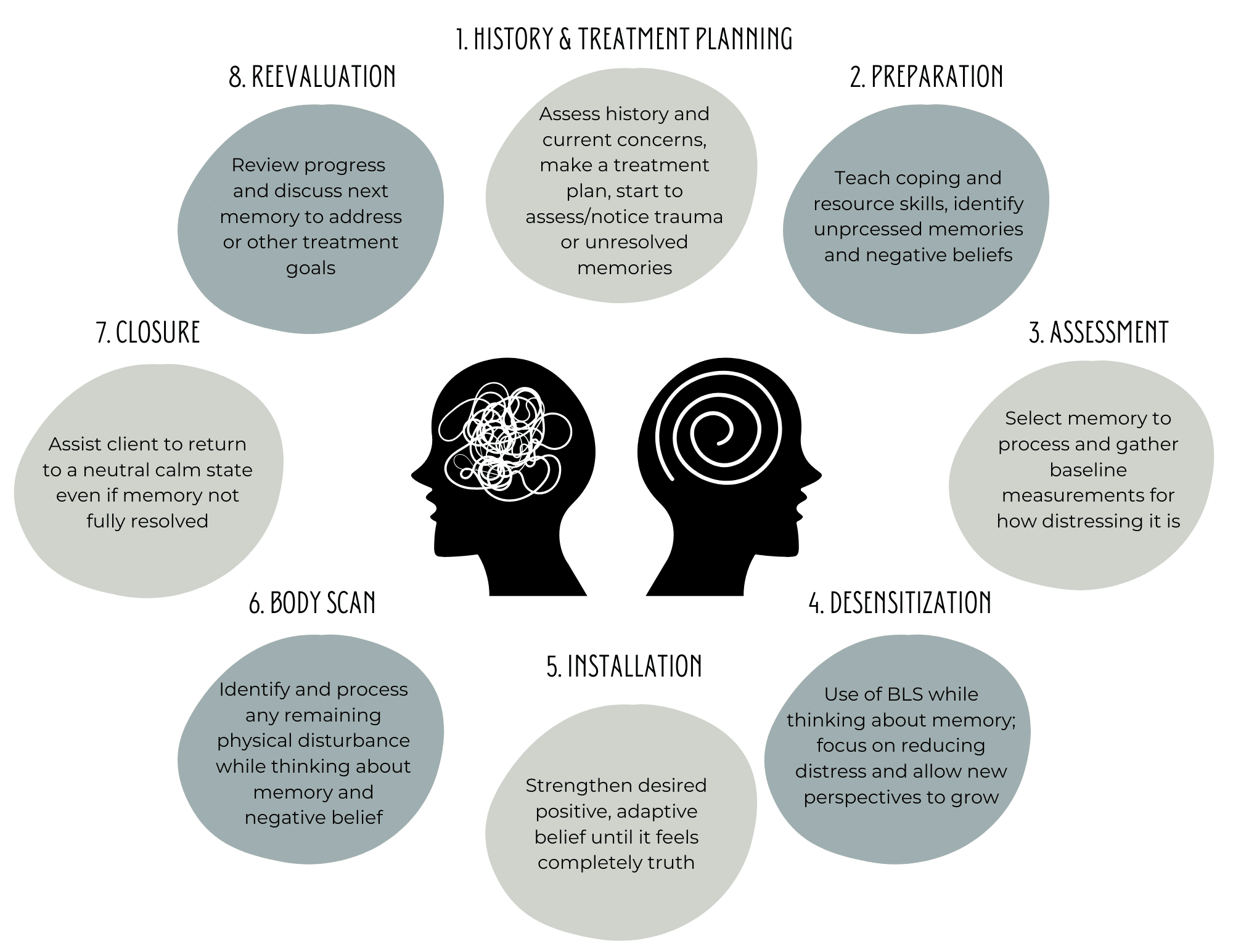
EMDR begins by establishing safety and identifying distressing memories, core beliefs, or patterns impacting current functioning. Once you're resourced, we use bilateral stimulation—such as eye movements or tapping—to help the brain reprocess those experiences. This allows painful memories to be integrated without reliving them in detail, reducing their emotional charge and influence. For clients with complex trauma or attachment wounds, EMDR can be adapted to support deeper, relational healing and long-term change.
-
Bilateral stimulation is a key part of EMDR that involves alternating stimulation of the left and right sides of the body—usually through eye movements, tapping, or sounds. This back-and-forth rhythm helps both sides of the brain work together to process stuck memories, similar to how the brain naturally processes information during REM sleep. It helps reduce the emotional intensity of distressing experiences and supports the brain’s ability to heal.
-
While EMDR is best known for treating PTSD, it’s also highly effective for a range of other concerns, including anxiety, depression, panic attacks, grief, low self-worth, and unresolved childhood or relational wounds. Many people carry the impact of experiences that may not seem “traumatic” but still shaped how they see themselves or navigate the world. EMDR helps reprocess those stuck or distressing memories, allowing for emotional relief, cognitive shifts, and healing at a deeper level. Whether you're struggling with anxiety that feels rootless or past experiences that still affect you today, EMDR can offer a meaningful path toward lasting change.
-
Yes, EMDR is a well-researched and safe therapy approach when conducted by a trained clinician. The process includes preparation and grounding strategies to ensure you feel supported and in control.
-
EMDR isn’t a one-size-fits-all approach. Some clients experience relief in just a few sessions, while others—especially those with complex trauma—may need longer-term work. Treatment is always paced according to your needs and readiness.
-
Yes. EMDR doesn't erase memories—it helps reduce their emotional charge. After processing, many people describe feeling less reactive, more grounded, and more at peace with the past.